Did you know that vocabulary is the single biggest differentiator in many 11+ exams—especially CEM? Here's how to build it fast, with zero overwhelm.
Why Vocabulary Matters
- CEM exams: Heavy use of cloze, synonyms, antonyms, inference.
- GL: English and Verbal Reasoning papers reward word depth.
- Strong vocabulary = better comprehension, reasoning, and writing.
Sources for Powerful Word Growth
- Wide reading: Fiction (adventure, classics, mystery), non-fiction (biographies, science).
- Listen and learn: Audiobooks or podcasts for new word exposure.
- Word games: Scrabble, Boggle, word search apps.
- Daily conversations: Challenge your child to use new words in sentences.
The Root/Prefix/Suffix Method
Instead of memorising lists, learn how words are built:
| Example Root | Meaning | Sample Words |
|---|---|---|
| "struct" | build | construct, instruct, destruct |
| "geo" | earth | geology, geography |
| "tele" | far | telephone, teleport |
- Each week, choose 5 roots and brainstorm words together.
- Explore prefixes ("un-", "re-") and suffixes ("-ful", "-less").
Cloze Mastery Sequence
- Practice filling in blank passages with context clues, not guesswork.
- Progress: Untimed → Timed → Mixed with synonyms/antonyms.
Synonym Web Building
- Pick a "core" word and build a web of synonyms, antonyms, related words.
- Example: "happy" → cheerful, content, joyful, elated, glum (antonym).
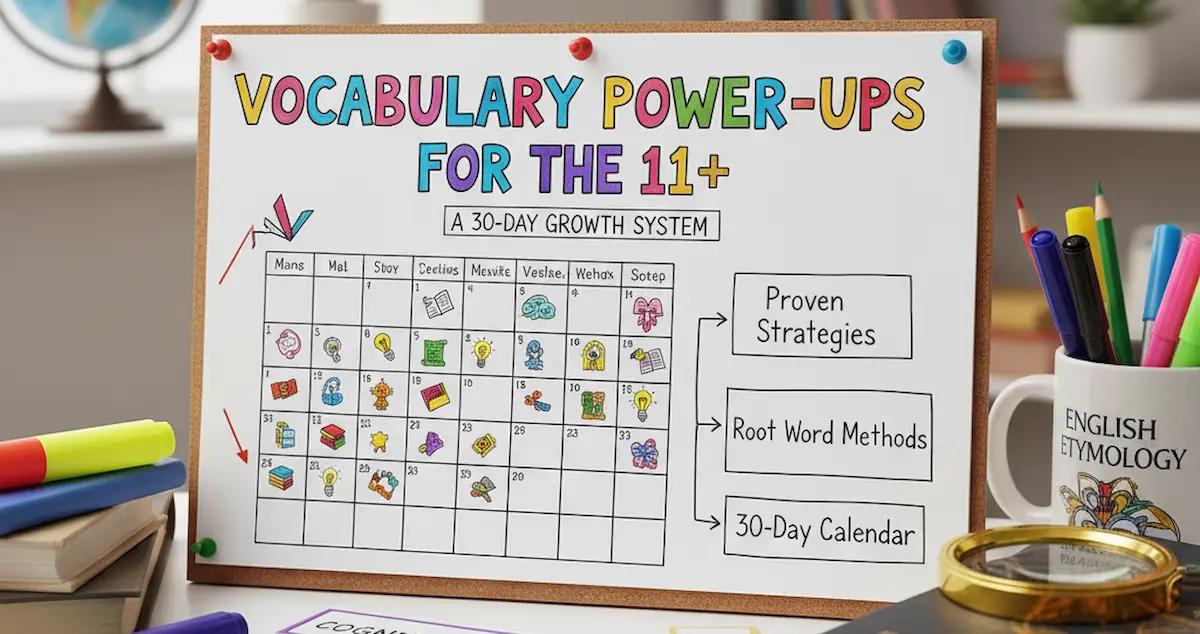
30-Day Calendar Sample (First Week)
| Day | Activity |
|---|---|
| 1 | Learn 3 root words, make sentences |
| 2 | Read one story, list 5 new words |
| 3 | Synonym/antonym web for "brave" |
| 4 | Cloze passage (untimed) |
| 5 | Vocab game (app or board) |
| 6 | Review roots and add 3 more |
| 7 | Use 3 new words in family conversation |
Repeat and vary for 4 weeks!
Tracking Retention (Spaced Repetition)
- Revisit old words every 3–5 days.
- Make flashcards (physical or app-based).
- Quiz at random times for fun ("What's an antonym for 'generous'?").
Avoid "Word Dumping"
- 50 new words per week = burnout, not growth.
- 5–10 words per week, deeply understood, beats lists.
Mini Case Study
Ella improved her CEM vocab score by 22% in two months using daily root mapping and family quizzes—no tutor needed!
Quick FAQ
Q: How many new words per week?
A: Aim for 5–10 deeply learned, not "crammed."
Q: Is reading alone enough?
A: Reading helps, but deliberate practice (roots, cloze, synonym webs) multiplies growth.
Q: Do I need a tutor for vocab?
A: Not if you use a structured system and involve your child in daily life.
🚀 Grab our 30-Day Vocabulary Calendar and start building your child's word power today!
Need a study timeline? → The Ultimate 11+ Preparation Timeline
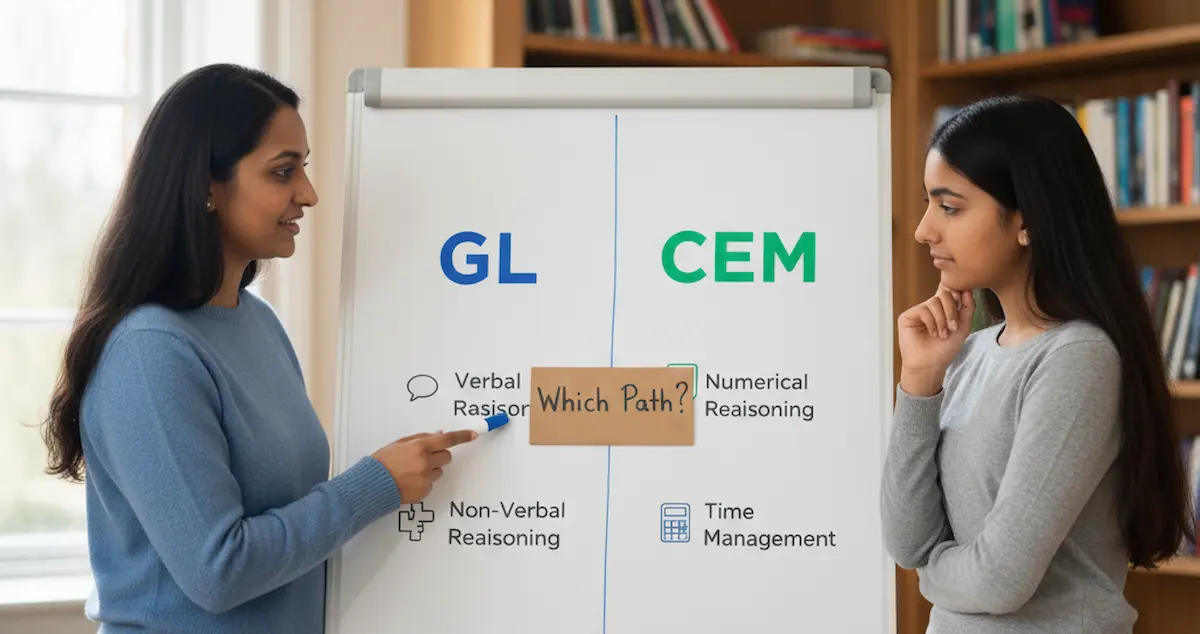
Understanding GL vs CEM styles? → GL vs CEM: Which Exam Style Fits Your Child?
Explore our 11+ glossary to look up word roots and exam terminology.